



July 15, 2024
Cast iron inserts are becoming increasingly popular in modern homes, and for good reason. These inserts are an excellent way to add both aesthetic and practical value to your home. Not only are they attractive and durable, but they also offer numerous longevity benefits. From improved energy efficiency to increased fire safety, cast iron inserts can help you enjoy a longer, safer, and more comfortable home life.
One of the primary longevity benefits of cast iron Cemented Carbide Inserts inserts is improved energy efficiency. Due to their dense, heavy construction, they are able to trap heat inside the home for longer periods of time. This helps to keep your home warm in the winter and cool in the summer, reducing your energy bills. Additionally, the heat-resistant properties of cast iron inserts also help to prevent extreme temperatures from damaging furniture or other items in your home.
Another long-term benefit of cast iron inserts is increased fire safety. Since cast iron is a non-combustible material, it does not catch fire easily. This means that if a fire did break out in your home, the cast iron inserts would offer an extra layer of protection, helping to contain the flames and minimize the damage.
Finally, cast iron inserts are also extremely durable, making them a great long-term investment. WNMG Insert Unlike other materials, cast iron is highly resistant to wear and tear, meaning it can last for decades with minimal maintenance. This helps to keep your home looking and functioning like new for many years to come.
Overall, cast iron inserts offer numerous longevity benefits that make them a great choice for any home. From improved energy efficiency to increased fire safety, these inserts can help you enjoy a longer, safer, and more comfortable home life.
The Cemented Carbide Blog: common turning Inserts
Posted by: philipryan at
07:51 AM
| No Comments
| Add Comment
Post contains 310 words, total size 2 kb.
July 11, 2024
Deep hole drilling inserts are designed to handle the tough task of drilling in abrasive materials. These inserts are designed to reduce wear and tear, and to extend the life expectancy of the drill bit. The inserts have a unique shape that can withstand the extreme forces and temperatures associated with drilling into abrasive materials.
The deep hole drilling inserts are usually made from a hard wearing material such as tungsten carbide or diamond. These materials are able to resist the extreme temperatures and abrasive forces. The shape of the insert is designed to provide maximum drilling efficiency. The insert is curved in the center, which allows for a more efficient cut by redirecting the force generated by the drill bit.
The deep hole drilling inserts also have built-in coolant channels that allow for the cooling of the drill bit during operation. This helps reduce the amount of heat that builds up in the insert and Surface Milling Inserts drill bit during operation, and helps reduce wear and tear on the tool. The coolant channels also help to reduce friction between the drill bit and the insert, which helps to extend the life of the drill bit.
The deep hole drilling inserts are designed to be used with a variety of different drilling methods. They can be used with traditional drilling methods, as well as with modern high-speed drilling machines. This allows for the use of the inserts in a variety of different types of abrasive materials.
The deep hole drilling inserts are a great tool to use when drilling in abrasive materials. They are designed to reduce wear and tear, and to extend the life of the drill bit. By using these inserts, drilling in abrasive Cemented Carbide Inserts materials can be done more efficiently and safely.
The Cemented Carbide Blog: Lathe Carbide Inserts
Posted by: philipryan at
02:23 AM
| No Comments
| Add Comment
Post contains 316 words, total size 2 kb.
July 03, 2024
Cermet inserts are a type of cutting tools that are widely used in the machining industry. They are made from a combination of ceramic and metal materials, providing a high level of hardness and wear resistance. As a result, they are often used for both rough and finish turning operations.
Cermet inserts can be used for rough turning operations due to their hardness and wear resistance. They can handle high cutting forces, allowing Cermet Inserts them to quickly remove large amounts of material in a short amount of time. The ceramic content of the insert also helps to reduce heat buildup during the cutting process, which helps to extend the life of the tool.
Cermet inserts are also suitable for finish turning operations. Due to their hardness, they can produce a very accurate surface finish, even on difficult-to-machine materials. The ceramic content in the insert also helps to reduce the gun drilling inserts amount of heat generated during the cutting process, which can help to prolong tool life.
In conclusion, cermet inserts are suitable for both rough and finish turning operations. They are able to handle high cutting forces, produce accurate surface finishes, and reduce heat buildup during the cutting process. As a result, they are a popular choice for many machining operations.
The Cemented Carbide Blog: cast iron Inserts
Posted by: philipryan at
06:31 AM
| No Comments
| Add Comment
Post contains 230 words, total size 2 kb.
June 27, 2024
Carbide inserts are cutting tools made of tungsten carbide, a material that is harder and more wear-resistant than high-speed steel or cobalt steel. They are used in a variety of machining and manufacturing processes, such as turning, drilling, boring, and milling. Carbide inserts come in a variety of shapes and sizes, each designed for a specific application. Here, we discuss the different types of carbide inserts and their applications.
The most common type of carbide insert is the face milling insert. These inserts are used in face milling operations to create a flat cut surface. They are usually made of a single piece of tungsten carbide and are often coated with an aluminum oxide for added durability. They are available in a variety of shapes and sizes to accommodate different cutting requirements.
Another common type of carbide insert is the turning insert. These inserts are used in turning operations to create a cylindrical shape. They are usually made of multiple pieces of tungsten carbide and are WCMT Insert designed to provide a smooth cutting action. They are available in a variety of shapes and sizes to accommodate different cutting requirements.
Drill inserts are another type of carbide insert. These inserts are used in drilling operations to create a hole. They are usually made of a single piece of tungsten carbide and are designed to provide a smooth cutting action. They are available in a variety of shapes and sizes to accommodate different cutting requirements.
Boring inserts are another type of carbide insert. These inserts are used in boring operations to create a larger diameter hole. They are usually made of multiple pieces of tungsten carbide and are designed to provide a smooth cutting action. They are available in a variety of shapes and sizes to accommodate different cutting requirements.
Finally, milling inserts are another type of carbide insert. Cutting Inserts These inserts are used in milling operations to create a complex shape. They are usually made of multiple pieces of tungsten carbide and are designed to provide a smooth cutting action. They are available in a variety of shapes and sizes to accommodate different cutting requirements.
In conclusion, there are many types of carbide inserts and their applications vary depending on the type of machining operation. Each type of carbide insert is designed to provide a specific cutting action and is available in a variety of shapes and sizes to accommodate different cutting requirements. Understanding the different types of carbide inserts and their applications can help you select the proper insert for your machining needs.
The Cemented Carbide Blog: Turning Inserts
Posted by: philipryan at
02:49 AM
| No Comments
| Add Comment
Post contains 440 words, total size 3 kb.
June 21, 2024
Innovation is at the heart of progress, and in the realm of manufacturing, this is especially true. There is a constant drive to create new technologies and tools that streamline production processes, improve efficiency, and enhance end products. One such innovation that has drastically changed the machining industry is the rise of indexable inserts.
Indexable inserts are cutting tools made from a range of materials, including carbide, ceramic, and diamond. They are designed to be used with specialized toolholders, which allow for easy replacement and indexing of the inserts. This innovation has had a significant impact on the industry, as it has made cutting tool maintenance and replacement much easier and more cost-effective.
The use of indexable inserts also makes it possible to machine hard Cutting Inserts materials, such as cast iron and steel, much more efficiently and with greater precision. This has led to significant improvements in the manufacturing of automotive parts, aerospace components, and many other products that require high-precision machining.
Another benefit of indexable inserts is their versatility. Different insert shapes, sizes, and materials can be utilized to meet the needs of specific machining applications. This means that manufacturers can produce a wider range of products using the same tools, reducing the need to invest in additional machining equipment.
The use of indexable inserts has also led to reduced waste. Because the inserts can be easily replaced when they become worn or damaged, there is less need to discard entire tools or components. This has led to improved sustainability, as well as cost savings for manufacturers.
Overall, the rise of indexable inserts has transformed the machining industry, allowing for greater efficiency, precision, versatility, and sustainability. As technology continues to advance, we can expect to see even more innovations in cutting tool design and manufacturing. These developments will undoubtedly have far-reaching implications for the manufacturing industry gun drilling inserts and society as a whole.
The Cemented Carbide Blog: TCMT Insert
Posted by: philipryan at
02:42 AM
| No Comments
| Add Comment
Post contains 329 words, total size 3 kb.
June 17, 2024
Cermet inserts are an increasingly popular choice for machining processes, due to their ability to withstand high temperatures and their resistance to wear. However, there are some limitations to using cermet inserts that should be taken into consideration before opting for them.
The first limitation is cost. Cermet inserts are more expensive than other types of inserts, such as carbide, and so the upfront cost of using them can be a factor. Additionally, because cermet inserts are more difficult to manufacture, the turnaround time for them is often longer than other types of inserts.
The second limitation is that cermet inserts are not as strong as other materials, such as carbide. This means that they are more prone to breakage and wear, which can affect the accuracy of the machining process. Furthermore, the strength of VNMG Insert cermet inserts can vary depending on the manufacturer, so it’s important to do your research before making a purchase.
The third limitation is that cermet inserts can’t be used for certain types of materials. For example, cermet inserts are not suitable for machining aluminum, as they can cause damage to the workpiece. Additionally, cermet inserts tend to be less effective at machining materials with high hardness, such as stainless steel.
Overall, cermet inserts have some advantages over other types of inserts, such as their ability to withstand high temperatures and their resistance to wear. However, it’s important to be aware of the limitations of using cermet inserts before making a decision.
The Cemented Carbide Blog: http://philiposbo.mee.nu/
Posted by: philipryan at
09:53 AM
| No Comments
| Add Comment
Post contains 263 words, total size 2 kb.
June 13, 2024
Cermet inserts are a type of cutting tool that is designed to handle heat-resistant alloys. They are made from a combination of ceramic and metal, which makes them highly resistant to heat. This makes them ideal for cutting and machining heat-resistant alloys, such as stainless steel, titanium, and Hastelloy. Cermet inserts are designed to stay sharp for longer and generate less heat during cutting, which makes them perfect for working with heat-resistant alloys.
Cermet inserts are typically used for turning, boring, and threading operations, and they can be used on a variety of materials. They are especially useful when machining heat-resistant alloys because they can withstand high temperatures without breaking down. This prevents the inserts from becoming dull or chipping, which can cause damage to the material and reduce the overall efficiency of the process. Cermet inserts are Carbide Inserts also very durable, which means they can be used for a long time without having to be replaced.
When using cermet inserts to work with heat-resistant alloys, it is important to use the proper cutting speed and feed rate. This will ensure that the inserts cut effectively and do not generate too much heat. It is also important to use a coolant to help dissipate heat and lubricate the cutting area, which will help to reduce the risk of damaging the material. Finally, it is important to use the proper tool geometry when using cermet inserts to work with heat-resistant alloys, as this will ensure that the cutting is accurate and efficient.
Cermet inserts are a great option for machining heat-resistant alloys, as they are highly resistant to heat and can stay sharp for a longer period of time. They are also very durable and generate less heat during cutting, which reduces the risk Cutting Inserts of damaging the material. Using the proper cutting speed and feed rate, as well as using a coolant and the proper tool geometry, will help to ensure that the inserts work effectively and efficiently.
The Cemented Carbide Blog: Turning Inserts
Posted by: philipryan at
03:30 AM
| No Comments
| Add Comment
Post contains 344 words, total size 2 kb.
June 05, 2024
Aluminum milling inserts are popular in milling operations due to their ability to provide a high level of performance and increased tool life. The inserts are made from a special grade of aluminum which is machined to exacting specifications for maximum precision and durability. Aluminum milling inserts offer several advantages over other tool materials, such as improved tool life, increased productivity, and improved surface finish.
One of the most important benefits of using aluminum milling inserts is their ability to provide extended tool life. Compared to other tool materials, aluminum inserts have an excellent wear resistance, which allows them to perform for longer periods of time without needing to be replaced. This means that there is less downtime for maintenance, resulting in increased productivity. In TCGT Insert addition, aluminum milling inserts can produce higher quality parts, with smoother and more consistent results.
Aluminum milling inserts are also more resistant to damage from shock and vibration, which can be common in metalworking operations. This helps to reduce the potential for tool failure, which can result in costly downtime. The inserts also provide greater stability and accuracy, which can be beneficial when machining intricate parts.
Aluminum milling inserts have become popular in recent years due to their ability to provide increased tool life and improved performance. They are widely used in a variety of metalworking operations, including turning, drilling, milling, and tapping. With their improved performance and extended tool life, aluminum milling inserts are becoming increasingly popular in TNGG Insert metalworking operations, and are sure to continue to be a preferred choice for metalworkers in the future.
The Cemented Carbide Blog: http://alanalfred.blogtez.com/
Posted by: philipryan at
06:37 AM
| No Comments
| Add Comment
Post contains 281 words, total size 2 kb.
May 31, 2024
High-feed milling is an important machining process in the manufacturing industry. It involves cutting metal components with a high rate of speed and feed rate. Steel inserts are often used in this process for their superior strength and durability. In this article, we will explore how steel inserts perform in high-feed milling.
Steel inserts are typically made from high-speed steel, which is renowned for its exceptional hardness and wear resistance. This makes them especially suitable for high-feed milling, as they can withstand the high cutting forces generated by the process. Steel inserts are also much more wear-resistant than carbide inserts, making them ideal for high-feed milling operations.
Steel inserts are also designed to hold up to the high feed rates used in shoulder milling cutters high-feed milling. The inserts are designed with special geometries and coatings to reduce friction and heat build-up, which helps them maintain their cutting edge longer. This allows them to cut for longer periods of time without having to be replaced, resulting in increased productivity.
Steel inserts are also designed to reduce vibration. This helps to reduce chatter and improve surface finish. Additionally, the inserts are designed to minimize tool deflection, which helps to ensure that the cut is accurate and of high-quality.
In conclusion, steel inserts are an ideal choice for high-feed milling operations. They are highly wear-resistant and designed to handle high feed rates. Additionally, they are designed to reduce vibration and minimize tool deflection, resulting in higher-quality cuts. For these reasons, steel RCGT Insert inserts are a great choice for high-feed milling operations.
The Cemented Carbide Blog: tungsten carbide Inserts
Posted by: philipryan at
04:05 AM
| Comments (4)
| Add Comment
Post contains 276 words, total size 2 kb.
May 27, 2024
When it comes to using a lathe, one of the most important aspects is the proper storage of the lathe insert. Lathe inserts are the cutting tools that are used to shape and cut materials such as metal and TNGG Insert wood. They come in different shapes, sizes, and materials, and their proper storage is crucial for maintaining their sharpness and durability.
Improper storage of lathe inserts can lead to a number of problems such as dullness, chipping, and even breakage during use. This not only affects the quality of your work but can also be dangerous for the operator.
One of the main reasons why proper storage of lathe inserts is important is to prevent damage to the tool. Lathe inserts are made of carbide, ceramic, or other materials that are susceptible to damage from moisture, dust, or other contaminants. Exposure to these elements can cause the insert to corrode or rust, and this can weaken the insert, making it more prone to breaking or chipping when in use.
Another reason why proper storage of lathe inserts is important is to APMT Insert maintain their sharpness. Lathe inserts are designed to be sharp and precise, and they can lose their sharpness over time if not stored properly. Dull lathe inserts not only result in poor surface finishes but also require more force to operate, which can increase the wear and tear of your lathe.
Proper storage of lathe inserts is not difficult, and it can be done in a few simple steps. Firstly, always keep the lathe inserts in their original packaging if possible, and store them in a dry and cool place. Moisture and heat can cause damage to the inserts, so it's important to keep them away from any sources of moisture or extreme temperatures.
If you need to store your lathe inserts outside of their original packaging, use a dedicated storage container that is designed specifically for lathe inserts. These containers are typically made of plastic or foam and have individual slots for each insert, allowing you to keep them organized and prevent them from rubbing against each other.
Overall, proper storage of lathe inserts is essential for maintaining their quality and durability. By taking the time to store your lathe inserts properly, you can ensure that they remain sharp, precise, and reliable, allowing you to achieve the best results from your lathe.
The Cemented Carbide Blog: CNC Carbide Inserts
Posted by: philipryan at
09:02 AM
| Comments (2)
| Add Comment
Post contains 411 words, total size 3 kb.
May 23, 2024
Carbide thread inserts are an efficient and cost-effective solution for mass-producing threaded components in the manufacturing industry. These inserts can provide immense time savings compared to traditional machining processes, such as tapping threads or winding threads. This is because the inserts are already pre-made and can be quickly installed into the workpiece with the help of a special installation tool.
The use of carbide thread inserts in manufacturing can significantly reduce production times. This is because fast feed milling inserts the inserts are already pre-made and can be quickly installed into the workpiece with the help of a special installation tool. As a result, the time required for tapping or winding threads is greatly reduced, which allows manufacturers to produce more parts in a shorter amount of time. Additionally, the inserts are highly durable and can be used repeatedly without the need for replacement, which further reduces the time required for production.
The use of carbide thread inserts also offers other potential time savings. For example, they can be used to produce threads of different sizes in a single workpiece, which eliminates the need for production of multiple parts with varying thread sizes. This saves both time and money, as the production process is simplified and fewer raw materials are required. Additionally, the inserts are highly resistant to corrosion and wear, which reduces the need for frequent maintenance and repairs.
In conclusion, carbide thread inserts offer a wide range of potential time savings in the manufacturing industry. They are pre-made and can be quickly and easily installed into the workpiece, reducing the time required for tapping or tungsten carbide inserts winding threads. Additionally, they can be used to produce threads of different sizes in a single workpiece, which eliminates the need for production of multiple parts with varying thread sizes. Finally, they are highly resistant to corrosion and wear, which reduces the need for frequent maintenance and repairs.
The Cemented Carbide Blog: cemented carbide wear pads
Posted by: philipryan at
08:14 AM
| Comments (7)
| Add Comment
Post contains 339 words, total size 3 kb.
May 20, 2024
Deep hole drilling inserts can be used in gun drilling applications. Gun drilling is a deep hole machining process that involves cutting a hole into a workpiece with a single-point cutting fast feed milling inserts tool. Gun drilling produces holes that are straight and have a smooth finish. Deep hole drilling inserts are designed to provide maximum performance for this application.
Deep hole drilling inserts have a number of advantages over traditional gun drilling. They provide improved cutting performance due to their unique geometry and cutting angles. They also reduce tool wear as they feature a stronger grade of carbide and a special coating that makes them more resistant to wear and tear. Additionally, deep hole drilling inserts are designed to have a longer tool life, making them more cost effective in the long run.
Deep hole drilling inserts are also better suited to more intricate, demanding applications. They can be used to drill deep holes with a high degree of accuracy and superior edge quality. This makes them ideal for a variety CCMT Insert of industries, such as aerospace, medical, and automotive.
In conclusion, deep hole drilling inserts can be a great alternative to traditional gun drilling applications. They provide improved cutting performance, reduce tool wear, and have a longer tool life. They are also better suited to more intricate, demanding applications. Deep hole drilling inserts can be a great choice for a variety of industries.
The Cemented Carbide Blog: https://johnnypayn.exblog.jp/
Posted by: philipryan at
06:12 AM
| No Comments
| Add Comment
Post contains 253 words, total size 2 kb.
May 14, 2024
Tungsten carbide inserts are a crucial part of modern machining. Their superior wear resistance and ability to hold a cutting edge make them ideal for precision and efficiency in metalworking. Tungsten carbide inserts are widely used in the automotive, aerospace and medical industries for tasks such as machining difficult-to-cut materials, deep hole drilling, and part forming.
Tungsten carbide inserts are made by combining a tungsten alloy with a ceramic binder. This material is incredibly hard and wear resistant. It is also capable of maintaining its sharp cutting edge for a long time, which ensures smooth cutting performance and improved efficiency. In addition, tungsten carbide is corrosion resistant and can withstand high temperatures.
Tungsten carbide inserts are used in a wide variety TNGG Insert of metalworking applications. They are often used for machining difficult-to-cut materials such as cast iron, aluminum, hardened steel and stainless steel. They also provide efficient and precise deep hole drilling, which is necessary in many automotive and aerospace applications. Part forming applications also benefit greatly from tungsten carbide inserts.
Tungsten carbide inserts offer a number of advantages over traditional cutting tools. For starters, they are incredibly hard and wear resistant, which allows them to hold their cutting edge for a long time. This means less time spent sharpening and less money spent on replacement blades. In addition, tungsten carbide inserts are corrosion resistant and can withstand high temperatures, which is ideal for machining difficult materials.
Overall, tungsten carbide inserts are an essential tool for precision and efficiency in metalworking. With their superior wear resistance and ability to hold a cutting edge, they provide a cost-effective and reliable solution for machining difficult-to-cut materials, deep hole drilling and part forming. With the right tungsten carbide inserts, you can take your tungsten carbide inserts metalworking to the next level.
The Cemented Carbide Blog: carbide insert blanks
Posted by: philipryan at
08:14 AM
| No Comments
| Add Comment
Post contains 317 words, total size 3 kb.
May 09, 2024
The answer to this question is yes. Cast iron fireplace inserts can be customized to fit your existing fireplace. Customization of cast iron fireplace inserts has become increasingly popular in recent years, as homeowners look for ways to increase shoulder milling cutters the efficiency and beauty of their fireplaces. With a customized cast iron insert, you can tailor the size, shape, and design to perfectly match the style of your home.
When considering a custom cast iron insert, the first step is to determine the size and shape of the insert that you need. The size will depend on the size of your existing fireplace, as well as the type of fuel you plan to use in the insert. If you are using a gas-burning insert, you will need to measure the opening in the fireplace to ensure that the insert will fit properly. Wood-burning inserts require more precise measurements, so it is best to consult with a professional to ensure the insert will fit properly.
Once you have determined the size and shape of the insert, you can then CCMT Insert begin to customize the design. Many companies offer a variety of design options, including intricate designs and detailed finishes. You may also be able to customize the color of the cast iron insert to match the décor of your home. In addition, some companies offer the option of customizing the type of fuel you will use in the insert, such as gas, wood, or pellets.
Customizing your cast iron insert can be a great way to add value and personalize your fireplace. With the right size and design, you can create a beautiful and efficient fireplace that will last for years to come.
The Cemented Carbide Blog: tungsten tig inserts
Posted by: philipryan at
08:32 AM
| No Comments
| Add Comment
Post contains 302 words, total size 2 kb.
May 06, 2024
Cutting inserts are tools used to cut a variety of materials. They come in a wide range of shapes and sizes, and each type of insert has its own TNMG Insert unique features and benefits. In this article, we’ll explore the different types of cutting inserts available and the advantages of each.
The most common type of cutting insert is the single-point insert. This is a one-piece tool that is designed to cut into a workpiece with a single cutting edge. These inserts are most commonly used for machining operations such as drilling, turning, and milling. Single-point inserts are available in a variety of shapes and sizes and can be used with a variety of different cutting tools.
Another type of cutting insert is the multi-point insert. This type of insert has multiple cutting edges that are designed to cut into a workpiece at the same time. Multi-point inserts are often used for more complicated machining operations, as they allow for faster and more accurate cutting. These inserts tungsten carbide inserts are available in a variety of shapes, sizes, and materials.
Finally, there are also specialty cutting inserts. These inserts are designed for specific applications and are not as widely available as the other types of inserts. Examples of specialty inserts include ceramic inserts, diamond inserts, and carbide inserts. Each of these inserts offer their own unique advantages and are best suited for specific cutting applications.
In conclusion, there are a variety of different types of cutting inserts available. Each type of insert has its own unique features and benefits, so it is important to choose the right insert for the job. By understanding the different types of inserts available, you can ensure that you are using the best tool for the job.
The Cemented Carbide Blog: common turning Inserts
Posted by: philipryan at
04:06 AM
| No Comments
| Add Comment
Post contains 309 words, total size 2 kb.
April 29, 2024
When selecting the right Coated Inserts cutting insert for a specific cutting tool holder, there are several key considerations to take into account. Firstly, the cutting insert's compatibility with the cutting tool holder must be ensured. This means ensuring that the insert has the correct dimensions and mounting style for the holder. Secondly, the cutting insert must be suited to the material being machined. The type of cutting insert should match the material being cut, taking into account factors such as the hardness, toughness and type of material. Thirdly, the cutting insert must be able to withstand the forces and temperatures generated during the machining process. The cutting insert must be made from a material that can withstand the stress of machining and maintain its cutting edge. Finally, the design of the cutting insert must be appropriate for the machining SNMG Insert process. For example, the number of cutting edges must be suitable for the type of machining being performed and the shape of the insert must be suitable for the cutting tool holder.
The Cemented Carbide Blog: CNC Inserts China
Posted by: philipryan at
03:08 AM
| Comments (1)
| Add Comment
Post contains 197 words, total size 2 kb.
April 26, 2024
Diamond-coated cutting inserts are an innovative tool used to tackle hard materials. This is a cutting-edge technology that is helping to improve the efficiency and productivity of machining operations. Diamond-coated cutting inserts have a number of advantages, including the ability to cut harder materials with less wear and tear on the cutting tools, longer tool life, and improved cutting feed rates. In this article, we will explore the benefits of using diamond-coated cutting inserts in hard material machining.
The first benefit of using diamond-coated cutting inserts is that they can cut harder materials with less wear and tear on the cutting tools. The diamond layer on the inserts helps to provide increased hardness and therefore improved cutting performance. This also helps to reduce the amount of time required to complete the machining process. Additionally, the diamond layer helps to create a smoother cutting surface Cutting Inserts and allows for greater accuracy and precision when cutting hard materials.
Another benefit of using diamond-coated cutting inserts is the longer tool life. The diamond layer on the inserts helps to improve the life of the cutting tools, as it can withstand the abrasive forces generated during machining. This helps to reduce tooling costs and increase overall productivity. Additionally, the diamond layer helps to reduce heat generation during machining, which is important for maintaining the integrity of the material being cut.
Finally, diamond-coated cutting inserts help to improve cutting feed rates. The diamond layer helps to reduce friction and improve the efficiency of the cutting process, which in turn helps to reduce cutting time. This can drastically improve production times as well as improving the quality of the end product.
In conclusion, the benefits of Carbide Inserts using diamond-coated cutting inserts in hard material machining are numerous. They allow for more efficient and precise cutting with less wear and tear on the cutting tools, longer tool life, and improved cutting feed rates. These advantages help to improve the productivity of machining operations and ultimately reduce costs. If you are in the market for a cutting tool that is reliable and effective, consider investing in diamond-coated cutting inserts.
The Cemented Carbide Blog: Cemented Carbide Inserts
Posted by: philipryan at
07:06 AM
| No Comments
| Add Comment
Post contains 372 words, total size 3 kb.
April 20, 2024
Greenleaf’s Excelerator end and face mills are designed for high-performance milling in difficult-to-machine materials using either carbide or ceramic TCGT Insert inserts in the same cutter bodies. The milling cutters are available in both coarse and fine pitch designs.
According to the company, the fine-pitch mills are said to allow for higher productivity, increased speed and feeds, higher material removal rates, and better process stability with through air/coolant. The increased number of teeth over the rod peeling inserts coarse-pitch mills, combined with insert grades, is said to maximize efficiency.
The fine-pitch mills perform well in roughing applications that require more tooling stability. Having more teeth in the cut reduces the chance of vibration when machining forgings with heavy interruptions. Better engagement provided by the increased number of teeth also produces better surface finish than coarse-pitch milling cutters.
Greenleaf’s fine-pitch Excelerator end mills are available in diameters ranging from 3/8" to 2 ½" (10 to 63 mm). The fine-pitch face mills are available in diameters ranging from 3" to 12" (80 to 315 mm).
The Cemented Carbide Blog: Drilling Inserts
Posted by: philipryan at
04:07 AM
| No Comments
| Add Comment
Post contains 188 words, total size 2 kb.
April 16, 2024
Water cutting, also known as water jet knife, referred to a kind of high-pressure water jet cutting technology, it’s high-pressure water cutting machine. Under the control of the computer, the workpiece can be carved arbitrarily, and it is less affected by the processed material quality. Due to its easy operation and good yield, water cutting is gradually becoming the mainstream cutting method in industrial cutting technology.
Historical Development
Early water cutting because the pressure of water is very small, and no abrasive is added, it can only be used to cut paper and other soft, low strength materials,which means its application range is very narrow.
Later, with the development of technology, high-pressure water pump can be used to cut more materials. Early water cutting relied entirely on the pressure of water to cut materials, but only cutting materials with lower strength than water pressure, the application is still limited.
Dr. Norman Franz has always been recognized as the father of the water knife. He was the first person to study ultra-high pressure (UHP) water knife cutting tools. Ultra-high pressure is defined as over 30 000 psi. Dr. Franz, a forestry engineer, wanted to find a new way to cut big trunks into the wood. In 1950, Franz first placed heavy objects on the water column, forcing water through a tiny nozzle. He acquired a short deep hole drilling inserts high-pressure jet (several times exceeding the current pressure) and was able to cut wood and other materials. His later research involved more continuous flow, but he found it very difficult to obtain continuous high pressures. At the same time, the life of parts is calculated in minutes, not weeks or months today.
In 1979, Dr. Mohamed Hashish began to study ways to increase the cutting energy of water knives in Frow’s research laboratory to cut metals and other hard materials. Dr. Hashish is recognized as the father of sand water knife. He invented the method of adding sand to an ordinary water knife. He uses garnet (a material commonly used on sandpaper) like sand. With this method, water knives (containing sand) can cut almost any material. In 1980, and water cutters were first used to cut metals, glass, and gravity turning inserts concrete.
Working principle of water jet cutting
The water-cut water jet starts from a pressurized pump and passes through a high-pressure tube to produce a pressure of 60,000 PSI, which is then ejected from the cutting nozzle. During the design process, small leaks can permanently damage the components and cause damage. Therefore, manufacturers and engineers will carefully handle the processing of high-pressure materials, using special technology to combine such machines. Users only need to know basic operational knowledge.
The cutting machine was applied in the industry in 1982, and it was first introduced in 1970. It is mainly used in the automotive, aerospace and glass industries in the industry, and the precision is continuously improved from these cuttings. The abrasive cutter can reach a pressure of 55,000 PSI, which is injected through a small nozzle at a speed of 762 m/s, which is 2.5 times the speed of sound.
Mixing the pomegranate sand into this high-speed water jet, mixing it in a mixing tube and then directly ejecting it from the sand tube to the material being processed at a speed of 305 m/s. This cutting process is actually a grinding and cutting process. The process, this power and movement are all produced by water.
The booster pump pressurizes the water again to achieve the desired pressure. It is worth noting that the abrasive cannot be added to the water or high-pressure water line because the line will wear through quickly. Therefore, it can only be added to the nozzle position to mix water and abrasive. At the same time, it can’t be too close to the exit, because it is necessary to give him a speed to accelerate, only the abrasive has a certain flow rate to have the cutting ability. In order to avoid the abrasive mixing of the abrasive and water, the water cutting nozzles are made of very hard, high strength materials such as tungsten carbide ceramic composites.
Advantages of water jet cutting
So what are the advantages of water cutting compared to traditional cutting methods?
Can be cut in a wide range. It can cut most materials such as metal, marble, glass and more.
Good cutting quality. Water cutting creates a smooth cut that does not create rough, burring edges.
No hot processing. Water cutting because it is cut with water and abrasives, does not generate heat (or produces very little heat) during processing, and this effect is ideal for materials that are affected by heat. Such as: titanium.
Environmentally friendly. Water cutting is cut with water and sand. This kind of sand does not produce toxic gas during processing, and can be directly discharged, which is more environmentally friendly.
Water cutting does not require replacement of the cutter unit, and a single nozzle can process different types of materials and shapes, saving cost and time.
Disadvantages of water jet cutting
The cost of water cutting equipment is second only to laser cutting, high energy consumption, high maintenance cost, and no cutting speed. Because all abrasives are disposable, they are discharged into nature once. The environmental pollution brought by it is also serious.
Cutting result of water jet cutting
Cutting thickness
The thickness of the water cut can be very thick, 0.8-100mm, or even thicker material.
Cutting speed
The water cutting speed is the slowest relative to wire cutting and laser cutting, and is completely unsuitable for mass production.
Cutting accuracy
Water cutting does not produce thermal deformation with an accuracy of ±0.1mm. If a dynamic water cutting machine is used, the cutting accuracy can be improved, and the cutting accuracy can be up to ±0.02mm, eliminating the cutting slope.
Slit width
The water-cut slit is approximately 10% larger than the diameter of the knife tube, typically 0.8-1.2 mm. As the diameter of the sanding tube expands, the incision becomes larger.
Cutting surface quality
Water cutting does not change the texture of the material surrounding the cutting seam. Thermal cutting methods, such as laser cutting, change the texture around the cutting area.
Order our waterjet parts online
Abrasive Waterjet Nozzles
Carbide Abrasive Waterjet Nozzles
$53.75 – $130.89Shop nowThe Cemented Carbide Blog: threading Insert
Posted by: philipryan at
05:53 AM
| No Comments
| Add Comment
Post contains 1068 words, total size 7 kb.
April 10, 2024
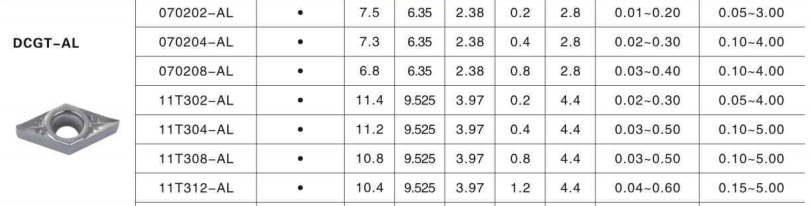
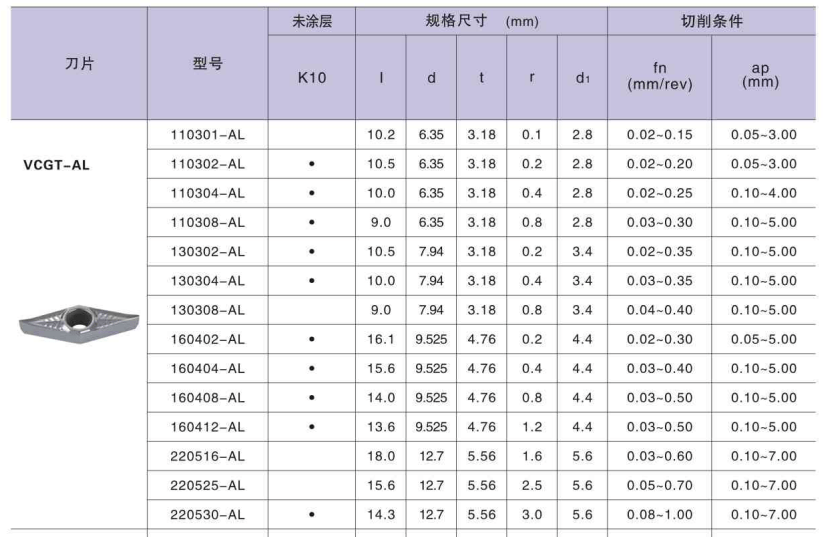
Are you looking for inserts made of carbide for aluminum? Compatible with each and every type of carbide insert. Carbide inserts that are both durable and of a high grade are used for cutting metal. Carbide is used in the construction of the main body, which has the capability of cutting through a variety of materials, including aluminum, plastic steel, and other metals. At the same time, carbide inserts, which are known for their extreme toughness and long-lasting nature. Inserts made of carbide for aluminum and copper, in the meantime. Carbide inserts are utilized for applications involving aluminum, and are paired with high-speed steel blades. Cnmg insert for aluminum, in addition to other great offers on machinery and supplies, can be found at Huana. Keep an eye out for sales and specials if you want to receive a significant discount on the apkt 1604 inserts for aluminum you purchase. At Huana, you’ll find an excellent selection of carbide insert for aluminum at competitive pricing. We won’t judge you for shopping for Carbide inserts for aluminum so frequently because the costs are so low. We are here to assist you in taking advantage of as many of the available discounts as possible, given all the different specials. Visit Huana, and have a fantastic time while you’re there shopping!
When working with turning applications, it is vital to use the correct form of an insert, and this shape is decided by the suitable point angle in order to maximize both strength and economy. The needs of the application and the amount of room available in the application for the cutting tool will determine the appropriate size of the carbide inserts to use when working with aluminum. Large insert sizes necessitate more stability when working with robust machinery; the usual size of apkt 1604 inserts for aluminum often climbs up to 25 millimeters. After the project is finished, the height of rotation may frequently cause a reduction in the scale of the insert.
How Do You Determine the Appropriate Size for Carbide Inserts Aluminum?
- Eliminate the most important amount of the cut depth.
- Find the needed cutting length, also known as LE, taking into account the tool holder entrance angle, the cutting depth, and the machine specification.
- Check that the right slice length for the insert is known to you.
Carbide insert for aluminum are utilized most commonly with aluminum; however, they are adaptable enough to meet the requirements of materials such as wood and acrylics. Machining aluminum successfully requires making adjustments to the process in order to take into account the material’s unique properties.
Implementing these tips will help you reduce the difficulties and generate high-quality components.
- Determine the Appropriate Feeds and Speeds
The optimal combination of feeds and speeds for cutting aluminum, as is the case with the vast majority of metals, falls within a more constrained range than those for cutting wood or acrylics. The process of cutting aluminum necessitates a faster spindle speed, which may test the capabilities of your carbide insert for aluminum to their absolute maximum. A rubbing that shortens the life of tools can be caused by feed rates that are too sluggish.
Feed rates that are excessively quick can overwhelm the machine, which can lead to the equipment breaking down. The time-honored practice of "playing it by ear” leaves much too much leeway for mistakes to be corrected. You will be able to compute rates with more accuracy if you use a calculator that takes into account both feeds and speeds.
- Carbide-Coated Bits Of Ever Smaller Diameters Should Be Used
Because cutting aluminum requires higher RPMs, high-speed steel and cobalt are not likely to be enough for the job. Because of its higher degree of brittleness, carbide is an excellent choice for use in?carbide inserts for aluminum manufacturing. In order to achieve faster machining rates, smaller diameter carbidevcgt 160402for aluminum are required. Another advantage of this situation is that the stiffness of the carbide will defend against any tool deflection that may occur.
- Maintain a Consistent Temperature
Aluminum is more susceptible to changes in temperature, which might result in waste as a result of finished components that are not within tolerance. Utilize computer hardware and software that are capable of maintaining temperatures at a level that is acceptable.
- Clear Chips Properly
Because aluminum chips have a particular "stickiness” element, they have a tendency to adhere to the tool in such a way that they virtually weld themselves to it. This results in subpar work and excessive wear and tear on the machinery. You shouldn’t put all of your faith on the dust collector systems. Always again check the vcgt 110304?insert to make sure that all of the chips have been removed. Reduce the likelihood of chips sticking together by circulating a coolant mist or another type of lubricant through the machine.
- Proceed With Caution
It is tempting to make larger cuts with vcgt 160402 inserts for aluminum in order to save time, but this tactic might backfire since it makes it more difficult to clear chips from the table. Continue using many shallow passes, since this will provide you with greater control as well as better access for chip removal.
- Reduce the Flutes’ Number
The presence of an excessive number of flutes in vcgt 160404?insert might make the chip issue worse by leading to an excessively close packing of the chips. When working with metal, reduce the number of flutes to no more than three for carbide inserts for aluminum. When there is more room in between the cutting blades, it is much simpler for bigger chips to slip through.
Creating properly completed components is now achievable thanks to our revolutionary stacked aluminum machining ccgt insert, which eliminates the need for the time-consuming and laborious traditional stacking, drilling, and riveting processes.
Our extensive collection of light, medium, and heavy-duty Groove Aluminum inserts provides options that are suitable for a wide variety of applications and industries.
How to buy Groove that suit for aluminum?
The process of choosing the right Aluminum groove that best meets your requirements may be broken down into the following easy phases.
First, Determine The Diameter Of The Wheel
If you are replacing an existing Aluminum wheel, this should be a reasonably smooth process for you; but, if you are ordering for a new application, you should consider how you want to mount it to your apparatus as well as the weight that it needs to hold before placing your purchase.
Second Step, Select the Appropriate Aluminum Groove Material
When it comes to your castors and wheels, this is potentially a very crucial factor to take into Carbide Milling Inserts account.
- Will the castor be utilized in an outdoor setting?
- Will the wheels come into touch with any substances that might be dangerous or corrosive?
- Will the wheels be capable of supporting excessive weights, such as up to one ton?

Third Step, Check the Load Capacity
You need to be aware of the load capacity of your castor wheels in order to prevent them from collapsing under excessive weights. However, you do not want to over-specify the castor wheels (for example, ordering those with a capacity of 500 kilograms when you only need those with a capacity of 200 kilograms), as the cost of the castor wheels will typically increase in proportion to the weight of the load.
How do you determine the load capacity?
- Take into consideration how heavy the tool is.
- The utmost weight that can be supported by it
- First, add all of them together to determine the overall weight or burden, and then divide the amount by three.
- The final number will represent the maximum weight that each castor should be able to support.
How to Select?the Best Carbide Insert for Aluminum?
A number of variables contribute to increased productivity while milling aluminum. Choosing the appropriate insert is critical to effectively and economically cutting metal. Use the information below or contact Huana for carbide insert for aluminum selecting guidance from qualified technical consultants.
- Insert Geometries
Carbide insert for aluminum are typically advised when bigger diameters, higher feed rates, and deeper cuts are used, or simply when changing inserts is preferable to regrinding a high-speed steel or brazed carbide tool for a variety of reasons. The usual insert substrate is tungsten carbide, which is more brittle than high-speed steel. Many ccgt 060204 inserts feature several cutting edges (for indexing), post-processing treatment (such as grinding, polishing, or coating), and may be available in varying radii depending on the application. Indexable tool holder shanks as tiny as 1/4″ may be found for lathes, while indexable milling diameters as small as 3/8″ can be obtained for milling machines.
Insert shape, rake angles, and relief angle are three primary geometries that have a significant impact on ccgt 09t304 insert performance. Because aluminum is a slippery and free-machining material, sharper angles are usually advised to aid shear through the material rather than pushing it with a honed or dull cutting edge.
- Shape of?Insert
When making smaller quantities or prototypes, the primary deciding element of an insert may simply be the tool holder available for that application, and many holders will have specialized geometries for cutting aluminum. Round, triangular, square, parallelogram, and diamond-shaped inserts can all be employed advantageously. When selecting an insert form, it is usually advised that the most acute angle be chosen after taking into account the specified application, clearance, depth of cut, feed rate, and amount of interruption that the application will allow. The geometry of the insert can increase application efficiency, effectiveness, and tool life. For example, a sharp 35° diamond shape might assist a high-speed finishing application in single-point turning of aluminum, but you may wish to avoid a sharp 35° diamond shape on sand-casted aluminum with a rough surface and use a round-shaped insert.
- Relief Angles
The relief angle is the angle formed between the workpiece and the cutting tool, often on the insert’s side. Relief angles are classified into two types: positive and negative. Any angle larger than zero is called positive relief, whereas any angle equal to zero is considered negative relief. The location of an insert on the holder can change the total relief; for example, an insert with a 20° relief can be angled to raise its overall relief to 25°. The relief angle, in combination with the rake angle, influences the cutting process and its outcome.
- Rake Angles
The rake angle is the angle between the cnmg insert for aluminum tip and the workpiece. Rake angles are classified as negative, neutral, or positive. A positive rake angle is excellent, and most manufacturers will employ their greatest positive angles for cutting geometry. A good rake angle aids in chip disposal, reduces insert cutting resistance, lowers cutting temperature, reduces built-up edge (BUE), improves machinability, and lowers cutting power needed. Caution is required since a positive rake angle is prone to fracture and should not be used on ferrous or difficult-to-cut materials.
- Chipbreakers
Aluminum chips are sticky and can become overwhelming quickly. A chipbreaker with a high positive and sharp edge is suggested. Rake angles and sharp cutting edges are typically emphasized with aluminum / non-ferrous specialized chipbreakers and are too sharp for many other materials.
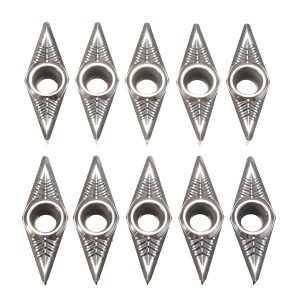
Aluminum Machining Special Chipbreaker:
Chip pocket with a high rake angle and a tabby pattern: low cutting load aluminum chipbreaker
- Design with a unique rake angle:excellent chip breaking and smooth chip flow
- Top face that is unique and 3-dimensional:longer tool life and great surface roughness
- Sharp cutting edge and tabby pattern:dispersed cutting load, extended tool life
- Buffed on top face:better machining and chip flow, less built-up edge
Conclusion
However, because there are so many variables to consider, if you want to improve the efficiency and predictability of your aluminum milling operations, the best course of action is to collaborate closely with the cutting tool manufacturer. This is the most effective technique to reach your goal. By contacting HUANA, you may obtain the best carbide insert for aluminum in a range of shapes and sizes.
The Cemented Carbide Blog: Turning Inserts
Posted by: philipryan at
07:52 AM
| No Comments
| Add Comment
Post contains 2110 words, total size 22 kb.
35 queries taking 0.0756 seconds, 141 records returned.
Powered by Minx 1.1.6c-pink.

